Best Hair Fall Control Food for Your Healthy Hair :
Beautiful and healthy hair starts with more than shampoos and oils. Your hair follicles need a regular supply of nutrients to support normal hair growth and maintain healthy hair. Here are some of the best foods to include in a balanced, hair-friendly diet.
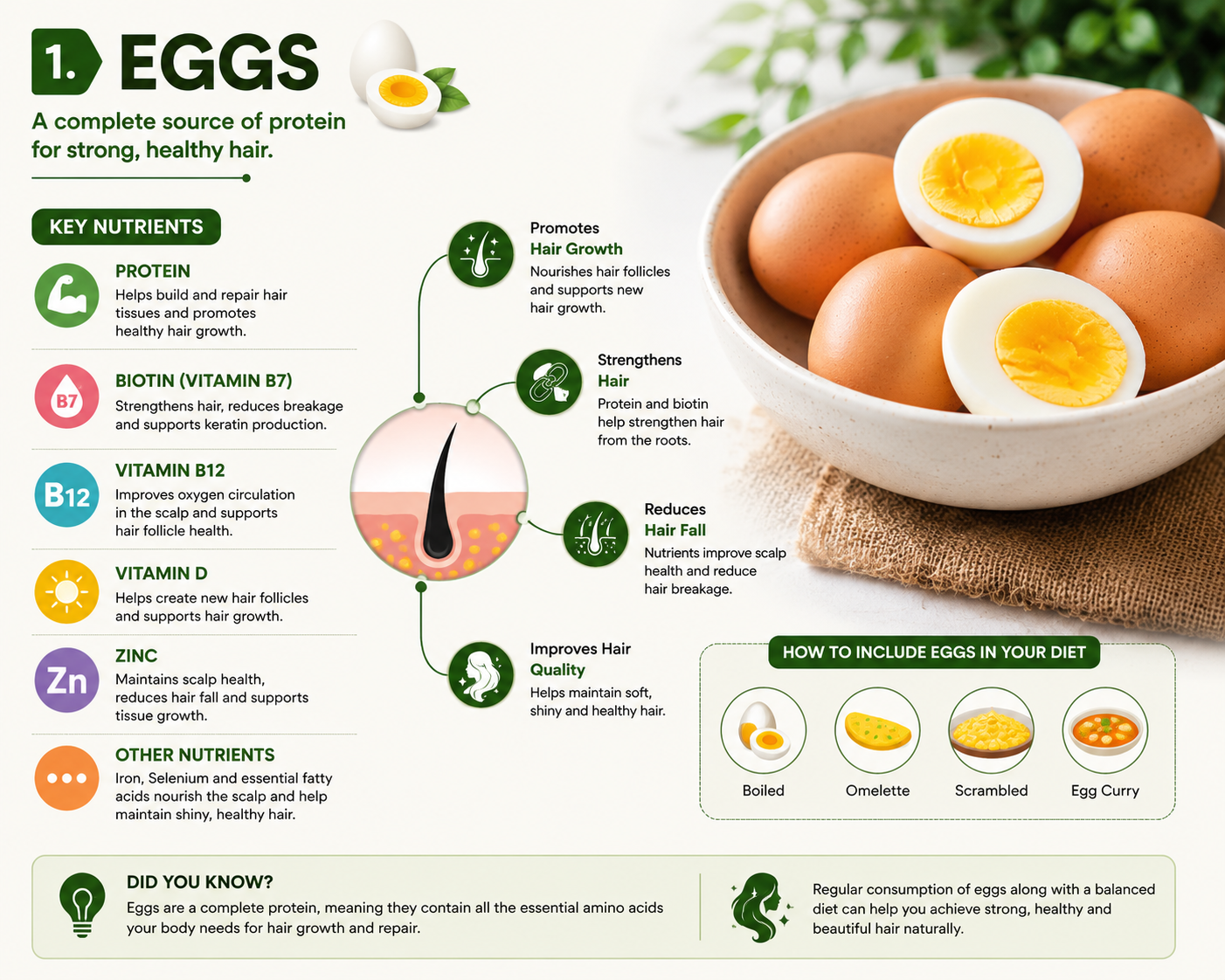
Key nutrients: Protein, biotin, vitamin B12 and other nutrients
Benefits for Hair
- Helps provide protein needed for normal body tissues.
- Contains biotin, which is involved in the body’s energy metabolism.
- Can be a convenient part of a protein-rich diet.
How It Supports Hair
Hair is largely made of a protein called keratin. Getting enough protein in your diet is important, as inadequate protein intake can contribute to hair loss.
How to eat: Boiled eggs, omelettes, egg curry, or scrambled eggs.
🥬 2. Spinach and Leafy Green Vegetables
Key nutrients: Iron, folate and vitamins
Benefits for Hair
- Helps support overall nutritional health.
- Provides iron, an important nutrient for the body.
- May be especially useful as part of a balanced diet when iron intake is low.
How It Supports Hair
Iron deficiency is one possible cause of hair loss. If you suspect iron deficiency, testing and professional advice are important.
How to eat: Add spinach to curries, dal, soups, smoothies, or salads.
🐟 3. Fatty Fish
Examples: Salmon, sardines and mackerel
Key nutrients: Protein and omega-3 fatty acids
Benefits for Hair
- Provides high-quality protein.
- Supplies healthy fats as part of a balanced diet.
- Supports overall nutritional health.
How It Supports Hair
Adequate protein intake is important for hair health, and fatty fish can be one nutritious source.
How to eat: Grilled, baked, or cooked in a light curry.
🥜 4. Nuts and Seeds
Examples: Almonds, walnuts, sunflower seeds and pumpkin seeds
Key nutrients: Healthy fats, protein, zinc and other micronutrients
Benefits for Hair
- Provides a variety of nutrients in a small serving.
- Can contribute protein and healthy fats to your diet.
- Some varieties provide zinc, which is important for making cells and enzymes.
How It Supports Hair
Zinc deficiency can contribute to hair loss, so getting adequate zinc from a balanced diet is important.
How to eat: Enjoy a small handful as a snack or add them to oats and salads.
🫘 5. Lentils, Beans and Chickpeas
Key nutrients: Plant protein, iron and zinc
Benefits for Hair
- Excellent plant-based source of protein.
- Can help increase dietary iron intake.
- Supports a balanced vegetarian or vegan diet.
How It Supports Hair
Regularly including protein-rich foods can help you meet your nutritional needs. Low intake of protein and certain nutrients may contribute to hair loss.
How to eat: Dal, chickpea curry, bean salad, or sprouts.
🥕 6. Carrots and Sweet Potatoes
Key nutrients: Beta-carotene and other vitamins
Benefits for Hair
- Supports overall nutrition.
- Adds important vitamins and antioxidants to a varied diet.
How It Supports Hair
A varied diet containing colourful vegetables can help support overall health. However, more is not always better—excessive vitamin A intake can itself be associated with hair loss.
How to eat: Roasted, steamed, in curries, soups, or salads.
🥑 7. Avocado
Key nutrients: Healthy fats and vitamin E
Benefits for Hair
- Provides healthy unsaturated fats.
- Adds nutritional variety to meals.
How It Supports Hair
Healthy dietary fats help support overall nutrition. Avocado can be included as part of a balanced diet, but no single food alone can guarantee faster hair growth.
How to eat: In salads, sandwiches, smoothies, or on whole-grain toast.
🍊 8. Citrus Fruits
Examples: Oranges, lemons, sweet lime and grapefruit
Key nutrients: Vitamin C
Benefits for Hair
- Vitamin C supports normal collagen formation.
- Helps the body absorb non-heme iron from plant foods.
How It Supports Hair
Combining vitamin-C-rich foods with plant sources of iron, such as lentils and leafy vegetables, can support good overall nutrition.
How to eat: Fresh fruit, fruit salad, or add lemon to meals.
🥛 9. Milk, Yogurt and Other Dairy Foods
Key nutrients: Protein, vitamin B12 and minerals
Benefits for Hair
- Provides protein.
- Can help contribute to daily nutritional requirements.
- Easy to include in breakfast or snacks.
How It Supports Hair
Adequate protein intake is important because insufficient protein can be associated with hair loss.
How to eat: Milk, curd, yogurt, paneer, or smoothies.
🍗 10. Chicken and Other Lean Protein Foods
Key nutrients: Protein, iron and zinc
Benefits for Hair
- Provides high-quality protein.
- Can contribute iron and zinc depending on the food.
- Helps meet daily protein requirements.
How It Supports Hair
Protein and nutrients such as iron and zinc are important for normal body function, and deficiencies can be associated with noticeable hair loss.
How to eat: Grilled chicken, chicken curry, or add to salads and balanced meals.
📊 Quick Food Guide for Healthy Hair
| Food | Important Nutrients | How It Supports Hair Health |
| 🥚 Eggs | Protein, biotin | Helps meet protein needs |
| 🥬 Spinach | Iron, folate | Supports adequate nutrient intake |
| 🐟 Fatty fish | Protein, healthy fats | Supports overall nutrition |
| 🥜 Nuts & seeds | Protein, healthy fats, zinc | Provides important micronutrients |
| 🫘 Lentils & beans | Protein, iron, zinc | Good plant-based nutrition |
| 🥕 Carrots | Beta-carotene | Adds vitamins to a varied diet |
| 🥑 Avocado | Healthy fats, vitamin E | Supports balanced nutrition |
| 🍊 Citrus fruits | Vitamin C | Supports collagen formation and iron absorption |
| 🥛 Dairy | Protein, B12 | Helps contribute to nutritional needs |
| 🍗 Lean protein | Protein, iron, zinc | Supports adequate protein intake |
🌱 A Simple Daily Diet Idea for Healthy Hair
🌅 Breakfast
- Eggs or paneer
- Oats or whole grains
- Fruit
- Milk or yogurt
☀️ Lunch
- Rice or roti
- Dal, beans, fish, chicken, or another protein source
- Green vegetables
- Salad
🌆 Evening Snack
- A small handful of nuts and seeds
- Fresh fruit
🌙 Dinner
- A balanced protein source
- Vegetables
- Whole grains
⚠️ Important Note
No single food can guarantee rapid hair growth or cure every type of hair loss. Hair loss can have many causes, including hereditary factors, illness, stress, nutritional deficiencies, and medical conditions. A balanced diet is helpful for overall hair health, but persistent or significant hair loss should be evaluated by a qualified healthcare professional.
Also, avoid taking high-dose supplements without medical advice. Dermatologists note that unnecessary or excessive amounts of some nutrients may be harmful and can even contribute to hair loss.
💚 Final Thought
Feed your body well, and give your hair the nutrients it needs to grow and stay healthy. Focus on a balanced diet with enough protein, fruits, vegetables, healthy fats, and essential vitamins and minerals rather than relying on a single “miracle” food.
Lorem ipsum dolor sit amet, consectetur adipiscing elit. Ut elit tellus, luctus nec ullamcorper mattis, pulvinar dapibus leo.