Dandruff and Hair Fall: Causes, Types, Effects and Dandruff Treatment
Dandruff is a very common scalp problem. It can be annoying, embarrassing, and frustrating, especially when you also notice more hair falling than usual. But don’t worry—having dandruff does not automatically mean you are going to lose your hair permanently.
With the right dandruff treatment and a little patience, most people can control the problem and keep their scalp healthier.
In this Hair Fall Guide, we’ll talk about what dandruff is, its different types, why it happens, how it can affect hair fall, home remedies, medical treatments, and when you should see a dermatologist.
What Is Dandruff?
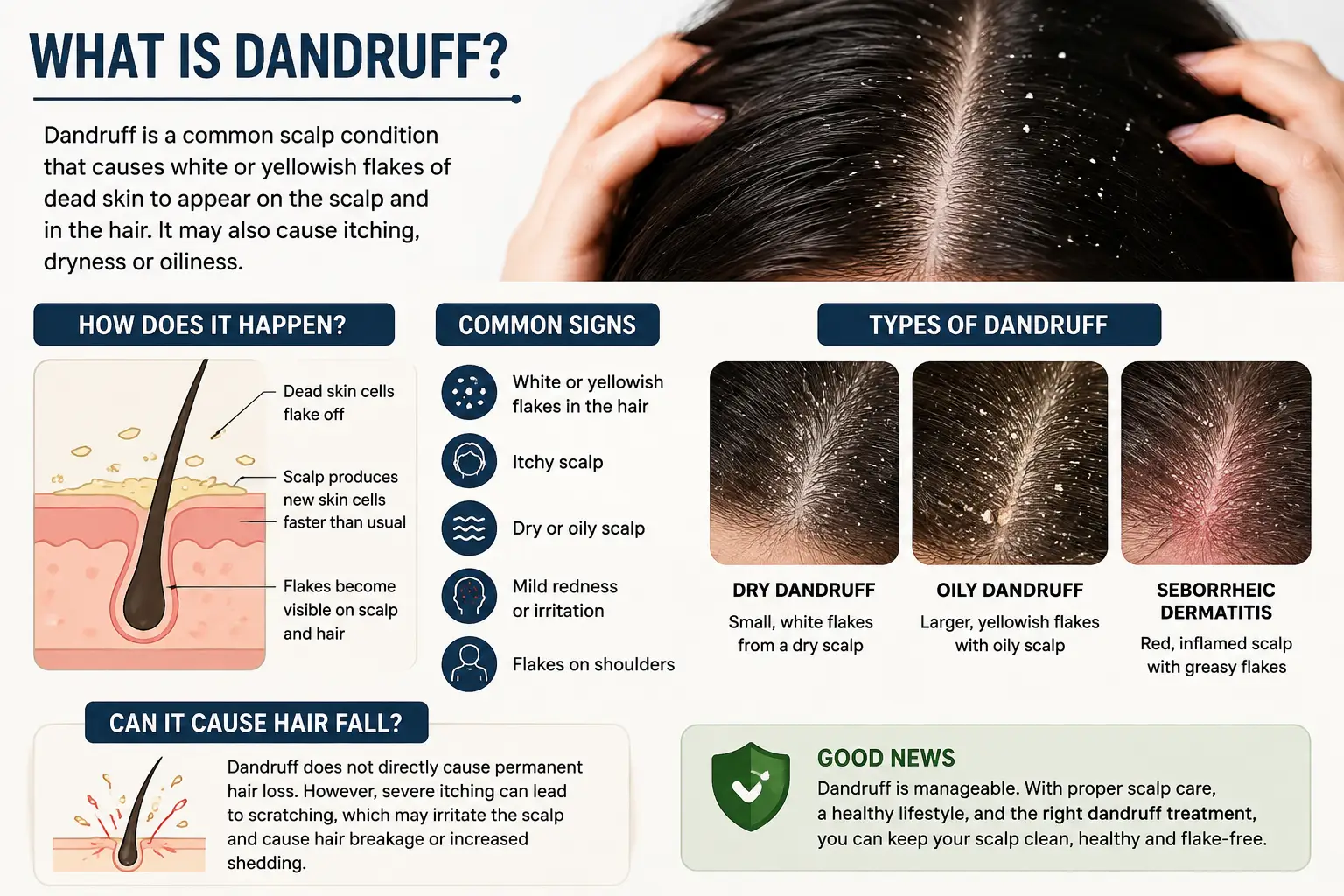
Dandruff is a common scalp problem that causes small flakes of dead skin to appear on your scalp and hair.Your scalp naturally produces and replaces skin cells. When this process becomes faster than usual, dead skin cells can build up and appear as flakes.
You may notice:
- White or yellowish flakes
- Itchy scalp
- Dry or oily scalp
- Scalp irritation
- Redness in some cases
- Flakes on your shoulders or clothing
One important thing to remember is that dandruff is not simply caused by poor hygiene. Even people who wash their hair regularly can develop it.
What Causes Dandruff?
There are several reasons why someone may develop dandruff. Understanding the cause can make your dandruff treatment more effective.
An oily scalp can encourage the growth of certain microorganisms and contribute to dandruff.
If your scalp becomes greasy quickly, you may notice larger or slightly yellowish flakes.
A microorganism called Malassezia naturally lives on most people’s scalps. For some people, it can contribute to scalp irritation and increased skin-cell turnover, resulting in dandruff.
A dry scalp can also produce visible flakes.
Cold weather, dry air, hot showers, and harsh shampoos can make dryness worse.
Sometimes what people call dandruff is actually a condition called seborrheic dermatitis.
It can cause:
- Redness
- Itching
- Greasy scales
- Flaking
- Scalp irritation
It can also affect areas such as the eyebrows, ears, beard, and sides of the nose.
Some hair gels, sprays, dyes, oils, and styling products can irritate the scalp.
If your dandruff or itching started after using a new product, consider stopping it for a while.
Stress may not directly cause dandruff, but it can make existing scalp problems more noticeable or difficult to manage.
Changes in temperature and humidity can affect your scalp.
Some people notice more dandruff during winter, while others experience increased scalp oiliness in hot and humid weather.
Different Types of Dandruff
Dry dandruff usually appears as small, white flakes. The scalp may feel tight or dry, especially during cold weather.
Common symptoms include:
- Small white flakes
- Dry scalp
- Mild itching
- Tight feeling on the scalp
Using harsh shampoos or washing with very hot water can sometimes make dryness worse.
Oily dandruff is often associated with excess scalp oil. The flakes may be larger and appear white or yellowish. Your scalp may also feel greasy.
Common symptoms include:
- Oily scalp
- Larger flakes
- Itching
- Greasy-looking hair
- Scalp irritation
This type may benefit from an appropriate medicated dandruff treatment rather than simply adding more oil to the scalp.
Seborrheic dermatitis is an inflammatory skin condition that can look like severe dandruff. The scalp may become:
- Red
- Itchy
- Greasy
- Flaky
- Irritated
If symptoms are severe or keep returning, it’s better to consult a dermatologist.
Sometimes flakes aren’t actually dandruff.
A reaction to a shampoo, hair dye, styling product, or other cosmetic product can cause scalp irritation and peeling.
If the problem began shortly after using a new product, stop using it and see whether the symptoms improve.
Does Dandruff Cause Hair Fall?
This is probably the question you’re most interested in. Dandruff does not directly cause your permanent hair loss but dandruff can indirectly contribute to increased hair shedding.
Here’s how.
Dandruff can make your scalp extremely itchy. When you repeatedly scratch your scalp, your fingernails can irritate the skin and damage hair that is already fragile. This can increase hair breakage and shedding.
Severe dandruff and conditions such as seborrheic dermatitis can cause inflammation. An irritated scalp can make hair shedding more noticeable.
Aggressive scratching can damage the hair shaft. This doesn’t necessarily mean the hair follicle is permanently damaged, but broken hair can make your hair appear thinner.
Dandruff vs Hair Loss: An Important Difference
It’s important not to blame every case of hair loss on dandruff. Hair loss can have many causes, including:
- Genetic hair loss
- Hormonal changes
- Nutritional deficiencies
- Certain illnesses
- Medications
- Major physical or emotional stress
- Alopecia areata
- Scalp infections
- Other scalp conditions
So, if you have dandruff and significant hair loss, treating the dandruff is useful, but you shouldn’t automatically assume it is the only cause.
Dandruff Treatment at Home
Regular washing can remove excess oil, dead skin, sweat, and product buildup. Choose a shampoo appropriate for your scalp type. If your scalp is oily, you may need to wash more frequently. If your scalp is dry or sensitive, avoid overly harsh cleansing.
One of the most practical forms of dandruff treatment is an anti-dandruff shampoo. Depending on the product and your symptoms, active ingredients may include:
- Ketoconazole
- Selenium sulfide
- Zinc pyrithione
- Salicylic acid
- Coal tar
Always follow the instructions on the product label. Some medicated shampoos need to remain on the scalp for several minutes before being rinsed.
When your scalp itches, scratching can feel satisfying for a few seconds. Unfortunately, repeated scratching can make irritation worse. Try gently massaging the scalp with your fingertips instead of scratching with your nails.
Hot water can make some people’s scalp feel drier and more irritated. Use lukewarm water when washing your hair.
If your scalp is irritated, reduce the use of styling products like hair gels, sprays, waxes, dyes, and strongly fragranced products may irritate sensitive scalps.
What About Natural Dandruff Remedies?
The internet is full of home remedies for dandruff. You may have heard about:
- Lemon juice
- Apple cider vinegar
- Baking soda
- Coconut oil
- Tea tree oil
- Aloe vera
But be careful.
Natural does not always mean safe.
Applying concentrated lemon juice, vinegar, baking soda, or essential oils directly to an irritated scalp can cause burning or further irritation.
Instead of experimenting with harsh kitchen ingredients, focus on gentle scalp care and evidence-based anti-dandruff products.
If you want to use a natural product, test it carefully and stop immediately if you experience burning, redness, or worsening itching.
Medical Dandruff Treatment
If regular scalp care isn’t controlling your dandruff, you may need medical treatment. A dermatologist can examine your scalp and determine whether you’re dealing with ordinary dandruff, seborrheic dermatitis, psoriasis, a fungal infection, or another condition. Depending on the diagnosis, treatment may include medicated shampoos or topical medicines.
Ketoconazole is an antifungal medication commonly used in dandruff shampoos. It can help control microorganisms associated with dandruff.
Selenium sulfide can help reduce scalp flaking and control certain microorganisms.
Salicylic acid helps loosen and remove scales from the scalp. It can be useful when there is significant buildup, although it may cause dryness in some people.
Zinc pyrithione has been widely used in anti-dandruff products to help control flaking and microorganisms.
Prescription Treatment
If you have significant inflammation or seborrheic dermatitis, a dermatologist may recommend prescription treatments. Don’t use prescription scalp medicines without professional advice.
How Long Does Dandruff Treatment Take?
There isn’t one exact timeline for everyone. Mild dandruff may improve after consistent use of an appropriate anti-dandruff shampoo. However, some conditions are chronic and may require ongoing maintenance. The biggest mistake is changing products every few days because you don’t see immediate results. Give an appropriate treatment enough time to work according to its instructions.
When Should You Visit a Dermatologist?
You should consider seeing a dermatologist if:
- Your dandruff is severe.
- Your scalp is very red or swollen.
- You have intense itching.
- You develop sores or painful areas.
- Your scalp develops significant crusting or oozing.
- Dandruff doesn’t improve with appropriate treatment.
- You develop bald patches.
- You experience significant or persistent hair loss.
- Your symptoms keep coming back.
A dermatologist can determine whether something other than dandruff is responsible for your symptoms.
Simple Daily Routine for a Healthier Scalp
You don’t need a complicated routine.
Step 1: Clean Your Scalp
Use an appropriate shampoo and keep your scalp reasonably clean.
Step 2: Treat the Dandruff
Use an anti-dandruff shampoo according to its instructions if you have recurring flakes.
Step 3: Don’t Scratch
Try to control the urge to scratch, especially with your nails.
Step 4: Avoid Irritating Products
Pay attention to products that cause burning, redness, or itching.
Step 5: Be Consistent
Don’t keep changing your routine every few days.
Step 6: Watch Your Hair Fall
If hair shedding remains high even after your dandruff improves, investigate other possible causes with a healthcare professional.
Can Treating Dandruff Stop Hair Fall?
It can help if scalp irritation and scratching are contributing to the shedding.
Once the scalp becomes healthier and the itching decreases, you may notice less scratching and breakage.
But if your hair loss has another underlying cause, dandruff treatment alone won’t necessarily stop it.
That’s why persistent hair loss deserves proper evaluation.
Final Thoughts
Dandruff may seem like a small problem, but constant itching and flaking can have a big impact on how you feel about your hair.
The good news is that dandruff is usually manageable.
Start with gentle scalp care, use an appropriate dandruff treatment, avoid scratching, and be careful with products that irritate your scalp.
And remember—not every case of hair fall is caused by dandruff.
If your hair loss is severe, persistent, or accompanied by bald patches or significant scalp inflammation, don’t try to treat everything at home. A dermatologist can help identify the real cause and recommend the right treatment.
A healthy scalp is an important foundation for healthy-looking hair. So take care of your scalp, be patient with your treatment, and don’t panic when you see a few extra hairs in the shower.